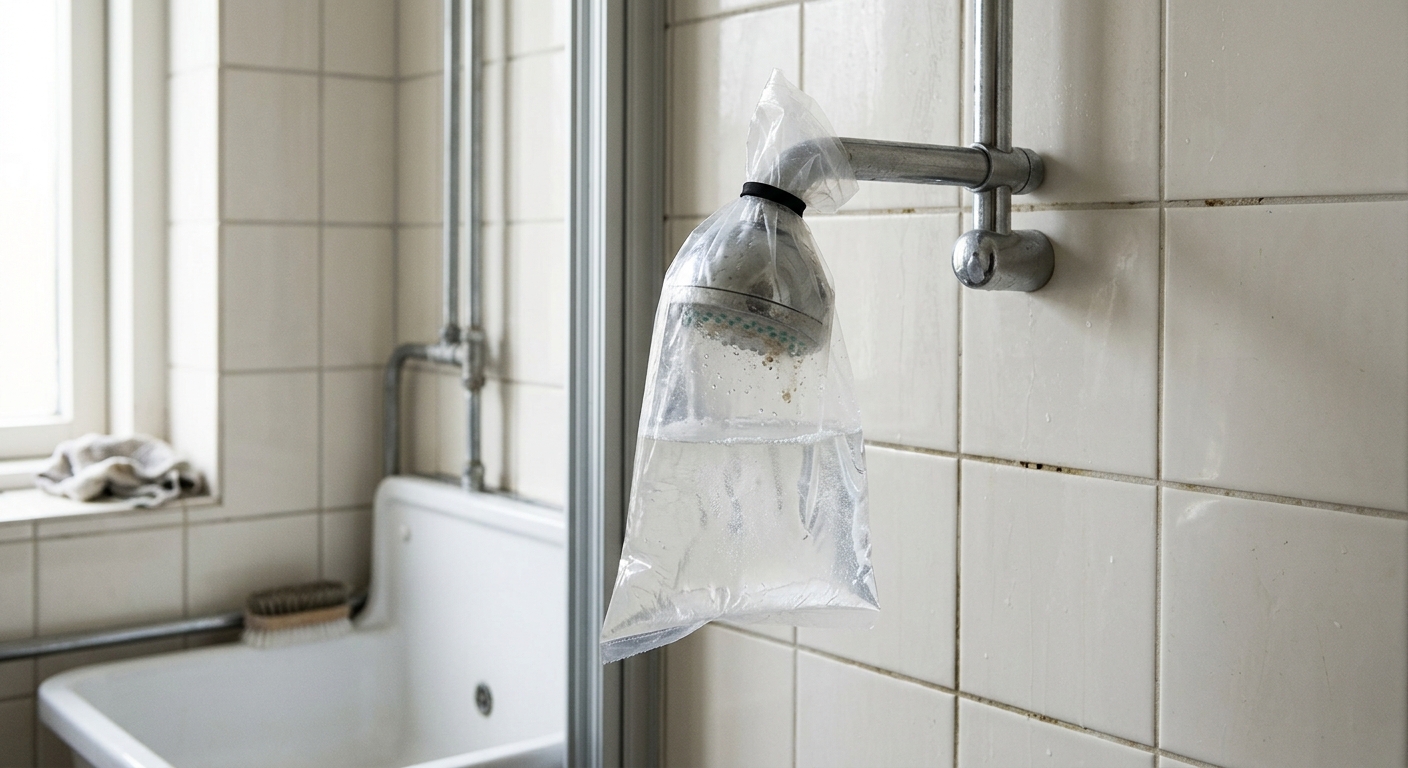
Bag the shower head in place with an inch or two of vinegar or citric acid solution, secure it with a zip tie or rubber band around the arm, and let it soak from 30 minutes for light scale to overnight for heavy buildup. This works because the shower arm connection is a standard 1/2 inch NPT thread on nearly every fixture you will encounter, so the soak bag seals the same way regardless of manufacturer. No disassembly, no thread tape, no risk of stripping a fitting that has been in place for a decade.
Mineral Clogs vs Soap Residue Clogs
Facility managers who specify soap dispensers already know the difference between a valve that is gummed with viscous soap residue and one that is clogged with mineral scale from hard water in the supply line. Shower heads fail the same two ways, and the diagnosis matters because the fix is different. Mineral clogs show up as a chalky white or greenish crust around the nozzle holes, uneven spray patterns where some jets run strong and others dribble, and a slow overall decline in flow that tracks with water hardness in that building or that wing.
Soap or biofilm buildup, by contrast, is soft, slimy, and usually smells faintly organic. It is common in shower heads that see infrequent use, such as unoccupied guest rooms or seasonal facilities, where standing water in the head breeds biofilm rather than depositing scale. Descaling solution will not touch a biofilm clog effectively. That needs a diluted bleach solution or a dedicated biofilm treatment, and conflating the two problems wastes a maintenance visit.
Bag-And-Soak Method Without Removal
The in-place method is standard practice for any shower head where the union nut is corroded, painted over, or otherwise not worth the labor to break loose. Fill a small plastic bag with enough solution to fully submerge the spray face, slide it up over the head, and cinch it tight against the arm with a zip tie, rubber band, or hose clamp so the solution does not drain out mid-soak.
- Use a bag large enough that the head is fully submerged, not just wet on one side.
- Check the seal after five minutes. A slow leak means the soak is not doing its job.
- For heavily calcified heads, add a soft-bristle brush pass halfway through the soak to loosen surface crust and let fresh solution reach the nozzle holes.
- Never use a wire brush or metal pick on chrome or brushed-nickel finishes. It scratches the plating and gives future scale more surface to grip.
After the soak, remove the bag and run the shower on hot for two to three minutes to flush loosened debris out of the nozzle holes. If the spray pattern is still uneven, a second soak is cheaper than replacing the fixture, and it is the same logic used when servicing clogged dispenser valves before condemning the unit.
Vinegar vs Citric Acid Solutions
Plain white vinegar is the default choice because it is cheap, available everywhere, and effective on calcium carbonate scale, which is what most municipal hard water leaves behind. Undiluted vinegar works faster than a diluted mix, but diluted 50/50 with water is gentler on rubber gaskets and finish over repeated use, which matters if a property is descaling fixtures every quarter.
Citric acid, either as pre-mixed solution or powder dissolved in warm water, cuts scale faster and has less odor, which is a real consideration in occupied buildings where a vinegar smell lingering in a bathroom generates complaints. It costs more per treatment but the labor savings from faster soak times can offset that in high-volume properties. Neither solution should be mixed with bleach or ammonia-based cleaners under any circumstance.
| Factor | Vinegar | Citric Acid |
|---|---|---|
| Soak time, moderate scale | 30 to 60 minutes | 20 to 40 minutes |
| Soak time, heavy scale | Several hours to overnight | 1 to 3 hours |
| Odor in occupied space | Noticeable | Minimal |
| Cost per treatment | Low | Moderate |
| Gasket-friendly at full strength | Less so | Yes |
Testing Flow Rate After Descaling
Federal law caps standard shower head flow at 2.5 gallons per minute, and WaterSense-certified heads are capped tighter at 2.0 gpm. Either way, a descaled head should return close to its rated flow, and that is the number to verify before you close out the work order. Run the shower into a bucket marked at one-gallon intervals for exactly 30 seconds, then double the result to get gallons per minute.
If a WaterSense head that should flow at 2.0 gpm is still testing under 1.5 gpm after descaling, the clog was not fully cleared, or scale has permanently narrowed the nozzle openings and the head is due for replacement. Keep the bucket-and-stopwatch test simple and repeatable so any maintenance tech on staff can perform it the same way and log a comparable number.
Building A Hard Water Maintenance Log
Hard water is not a residential nuisance you can ignore at the facility scale. Buildings on well water or municipal supply with high mineral content need a descaling schedule tied to actual water hardness, not a generic annual reminder. A simple hardness test kit, run once when a property comes under management and rechecked annually, tells you which wings or buildings need quarterly attention and which can go a full year between treatments.
Track three things per fixture: last descale date, flow rate at last test, and hardness grain reading for that water zone. Properties with grains over 10 typically need shower head descaling every 60 to 90 days to keep flow rates near spec. This is the same logic that governs cleaning schedules for soap dispenser nozzles in the same hard water zones, since both fail from identical mineral deposition mechanics. If you are already tracking dispenser service intervals by building, add shower heads to the same spreadsheet rather than running a separate system.
When In-Place Descaling Fails
Some heads will not respond to soaking no matter how long you leave them. That usually means the scale has penetrated internal channels that the bag-and-soak method cannot reach, or the flow regulator disc inside the head is calcified beyond recovery. At that point the labor cost of full disassembly and hand-cleaning each nozzle often exceeds the cost of a replacement head, especially on lower-cost fixtures.
For properties doing a broader bathroom renovation or replacing fixtures on a capital cycle, it is worth specifying complete shower systems with valve, head, and body jets matched from the start, since mismatched aftermarket heads on old valves are a common source of pressure and flow complaints that get mistaken for scale problems. A head that will not hold rated flow after a proper descale and flush is not worth another maintenance visit.
Before scheduling a replacement, confirm the bag-and-soak was done correctly: full submersion, adequate soak time for the water hardness in that zone, and a post-soak flush. Log the flow rate test result either way. If three consecutive descale cycles fail to bring a head back to within 10 percent of its rated flow, replace it and note the hardness reading that drove the failure, so the next fixture on order can be specified with that water condition in mind.